
PREGUNTAS FRECUENTES
FAQs
At SALMA Environmental Solutions, we understand that choosing the right wheel washing and dust suppression systems requires detailed information. To help you make informed decisions, we have compiled answers to some of the most common questions about our technology, applications, customization options, and operational requirements. If you need further assistance, our team is always ready to provide expert guidance tailored to your specific needs.
- Home
- FAQs
FREQUENTLY ASKED QUESTIONS
WHEEL WASHING
Why is a wheel washing system necessary?
Wheel washing systems prevent dirt and mud from being transferred onto public roads, reducing dust emissions, improving road safety, and helping businesses comply with environmental standards.
What is the purpose of a wheel washing system?
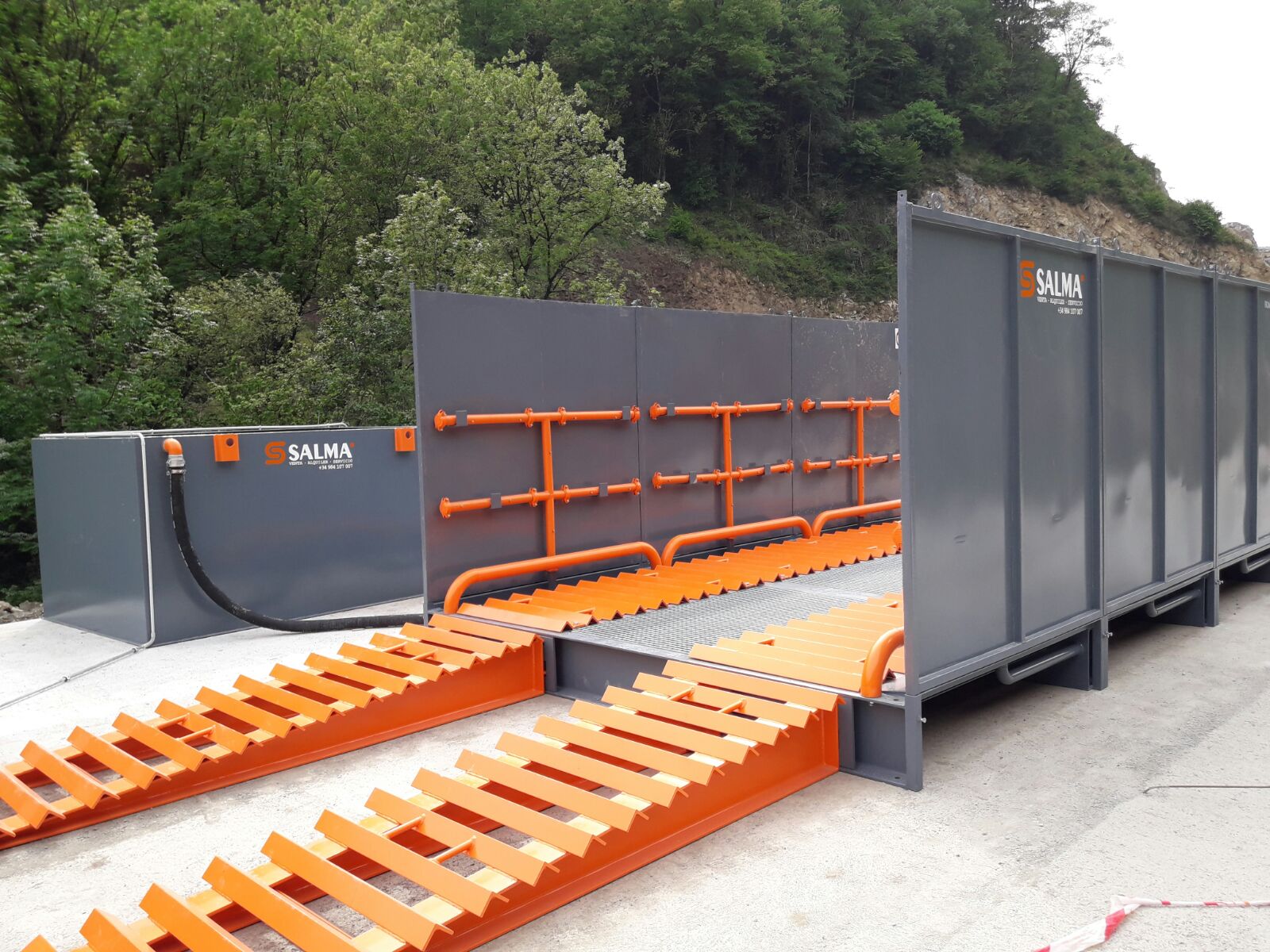
A wheel washing system is designed to automatically remove dirt, mud, and debris from vehicle tires as they pass through, helping to maintain clean roadways and comply with environmental regulations.
Who is responsible for installing and servicing wheel wash equipment?
SALMA handles the installation and maintenance of wheel washing systems, ensuring optimal performance and longevity through expert support.
How does a drive-through wheel wash operate?
A drive-through system activates automatically when a vehicle enters, using high-pressure water jets from multiple nozzles to clean tires and chassis efficiently without requiring the vehicle to stop.
How much water does a wheel washing system use?
SALMA’s wheel washing systems are designed with efficient water recycling in mind. Depending on the model, the system can reuse up to 95% of the water, significantly reducing consumption and operating costs.
Do you offer mobile or temporary wheel wash solutions?
Yes, we offer mobile and modular wheel washing systems that are easy to install and relocate. These units are ideal for temporary projects such as construction sites or mining operations where mobility and flexibility are key.
Can the wheel washing system be equipped with a vehicle disinfection system?
Yes, our wheel washing systems can be integrated with disinfection arches to ensure thorough sanitation of vehicles. This additional feature is particularly useful for industries requiring biosecurity measures, such as agriculture, waste management, and food transportation. The disinfection arches spray a specialized sanitizing solution over the vehicle, effectively reducing the risk of contamination.
How long does it take to install a wheel washing system?
Installation times vary depending on the model and site conditions, but most of our systems can be set up and operational within one to two days.
What types of vehicles can use a wheel washing system?
SALMA’s wheel washing systems are designed to clean the wheels of a wide range of vehicles, from vans to heavy-duty trucks that operate on public roads. We manufacture systems capable of handling axle loads of up to 20 tons, ensuring effective cleaning for various vehicle types and applications.
Can a wheel washing system affect the condition of a vehicle?
SALMA’s wheel washing systems are designed to clean effectively without causing any damage to tires, undercarriages, or other vehicle components.
How much does a wheel washing system cost?
The cost of SALMA’s wheel washing units typically varies between EUR16,000 and some EUR85,000, depending on the type, size, configuration and features of the solution.
What maintenance is required for a wheel washing system?
Very little. Routine maintenance includes checking and cleaning filters, inspecting nozzles for blockages, and ensuring that the water recycling tanks are functioning correctly. Regular servicing helps maintain optimal performance and prolongs the system’s lifespan.
Can the system operate in extreme weather conditions?
Yes, our wheel washing systems are built to function in various weather conditions. For freezing environments, we offer heating solutions to prevent ice formation, ensuring the system operates efficiently year-round.
Can the system be customized for specific site requirements?
Absolutely. Our wheel washing systems can be tailored to suit different site conditions, vehicle types, and operational needs. We work closely with clients to design the most effective and efficient solution for their specific applications.
What environmental benefits does a wheel washing system offer?
By preventing dirt and debris from being tracked onto public roads, our wheel washing systems help reduce dust pollution and environmental contamination. Additionally, their water recycling capabilities minimize water wastage and promote sustainable practices.
FREQUENTLY ASKED QUESTIONS
Cannons
What is dust suppression?
La supresión de polvo se refiere a cualquier método de control de polvo que utilice agua. Se emplea comúnmente en estrategias de mitigación de polvo debido a su rentabilidad, accesibilidad y seguridad ambiental.
Hay dos tipos principales de supresión de polvo:
Supresión de superficies: El agua se aplica directamente a los materiales para aumentar el peso y la cohesión, evitando que el polvo se transporte por el aire.
Supresión en el aire: Las partículas finas de niebla interactúan con el polvo en el aire, aumentando el peso de las partículas y conduciéndolas al suelo.
La tecnología de niebla atomizada sobresale en ambas aplicaciones. A diferencia de los sistemas convencionales, que sobresaturan los materiales o no controlan el polvo en el aire, la niebla atomizada equilibra el tamaño de las gotas y el contenido de humedad para una gestión integral del polvo.
Hay dos tipos principales de supresión de polvo:
Supresión de superficies: El agua se aplica directamente a los materiales para aumentar el peso y la cohesión, evitando que el polvo se transporte por el aire.
Supresión en el aire: Las partículas finas de niebla interactúan con el polvo en el aire, aumentando el peso de las partículas y conduciéndolas al suelo.
La tecnología de niebla atomizada sobresale en ambas aplicaciones. A diferencia de los sistemas convencionales, que sobresaturan los materiales o no controlan el polvo en el aire, la niebla atomizada equilibra el tamaño de las gotas y el contenido de humedad para una gestión integral del polvo.
What is atomized mist?
Atomization is the process of breaking down a liquid into extremely fine droplets. In the context of dust control, atomized mist technology uses specialized nozzles to generate millions of microdroplets, ensuring maximum surface coverage. Different nozzle configurations and engineering techniques allow for various droplet sizes, optimizing effectiveness for different applications.
Why is atomized mist used for dust control?
La niebla atomizada se usa ampliamente en diversas industrias, desde el enfriamiento de espacios para eventos hasta la regulación de la humedad para el curado del hormigón. Su principal ventaja en la supresión de polvo radica en su capacidad para hacer coincidir el tamaño de las gotas de agua con las partículas de polvo. Cuando la gota es demasiado grande, las partículas de polvo pueden seguir el flujo de aire a su alrededor en lugar de chocar. Sin embargo, cuando ambos tamaños son comparables, las gotas capturan y sedimentan eficazmente el polvo.
Además, la niebla atomizada consume significativamente menos agua que los métodos tradicionales como las mangueras o los sistemas de rociadores, que pueden usar hasta 20 veces más agua de la necesaria. A diferencia de estos sistemas de alto flujo, la niebla atomizada está diseñada específicamente para la supresión eficiente y específica del polvo.
Además, la niebla atomizada consume significativamente menos agua que los métodos tradicionales como las mangueras o los sistemas de rociadores, que pueden usar hasta 20 veces más agua de la necesaria. A diferencia de estos sistemas de alto flujo, la niebla atomizada está diseñada específicamente para la supresión eficiente y específica del polvo.
How important is water quality?
Water quality plays a crucial role in maintaining system performance. While potable water is ideal, non-potable water can also be used with the proper filtration systems. It is important to inspect and clean nozzles regularly, as dirty water can cause blockages and reduce efficiency.
What type of water connections do your units use?
La mayoría de nuestros sistemas están equipados con una conexión de agua BSP (DN25) de 1". Nuestros modelos M5 manuales más pequeños cuentan con una conexión BSP de 3/4".
What are the electrical requirements?
Electrical specifications vary depending on the model. Please refer to the technical data sheets for the detailed power requirements of each unit.
Are there options for locations without access to electricity?
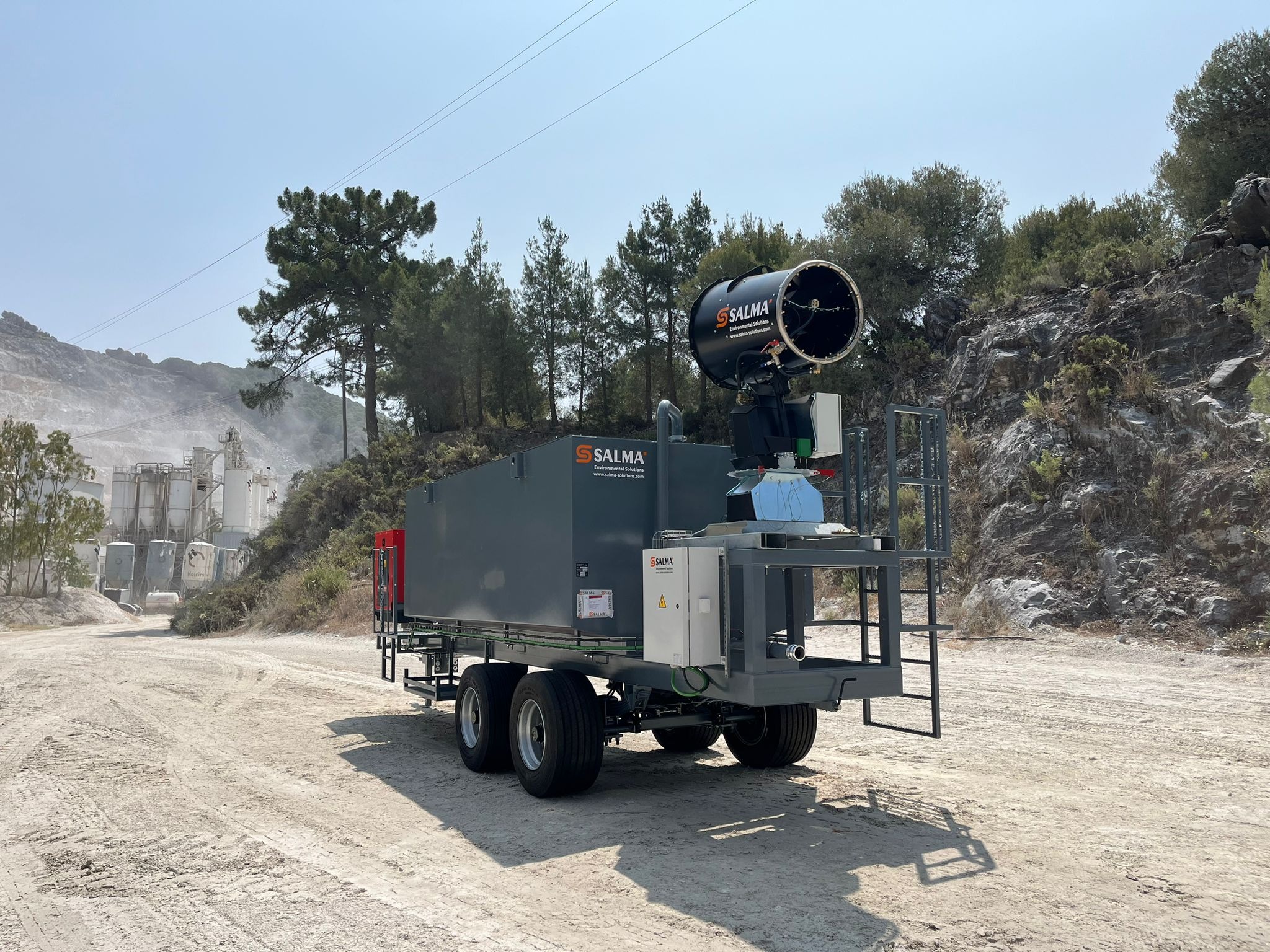
Absolutely. While our dust suppression cannons typically require electricity, SALMA offers self-powered mobile solutions. Our SAT units integrate a high-performance generator with the cannon and are mounted on trailers for easy mobility. These units are available across our product range, ensuring flexible operation in remote job sites.
What mounting options are available?
Los sistemas de supresión de polvo de SALMA están diseñados pensando en la versatilidad. Las opciones de montaje disponibles incluyen:
• Carro de tres ruedas: para facilitar la movilidad en las zonas de trabajo.
• Montaje sobre patines: Proporciona una base estable que puede ser transportada por una carretilla elevadora.
• Montaje en torre: Eleva la unidad para una cobertura más amplia y una mayor eficiencia.
• Carro de tres ruedas: para facilitar la movilidad en las zonas de trabajo.
• Montaje sobre patines: Proporciona una base estable que puede ser transportada por una carretilla elevadora.
• Montaje en torre: Eleva la unidad para una cobertura más amplia y una mayor eficiencia.
Are there alternatives to fan-driven misting systems?
Yes, in some cases a high-powered fan may not be necessary or suitable. For localized applications, spray bars or misting systems can be installed. These systems operate solely with pressurized water, making them ideal for conveyors, crushers, or indoor environments. Custom-designed spray bars can be tailored to specific applications, creating a fine mist curtain that effectively captures and contains dust.
Can the systems be customized?
Customization is one of SALMA’s core strengths. Whether adapting spray bar designs, integrating remote control capabilities, or modifying configurations for specific site challenges, our engineering team works closely with clients to develop tailored solutions. Each project presents new opportunities to innovate and refine our technology to meet specific operational needs.
What remote and automation features do you offer?
Los cañones de supresión de polvo de SALMA se pueden controlar de forma remota desde distancias de hasta 100 metros. Hay varios niveles de automatización disponibles, que incluyen:
• Ajustes de funcionamiento temporizados.
• Programación de intervalos para la eficiencia energética e hídrica.
• Integración de estaciones meteorológicas para ajustar el funcionamiento en función de la dirección del viento y la humedad.
• Ajustes de funcionamiento temporizados.
• Programación de intervalos para la eficiencia energética e hídrica.
• Integración de estaciones meteorológicas para ajustar el funcionamiento en función de la dirección del viento y la humedad.
Which unit is best for my site?
Selecting the right dust suppression system depends on factors such as coverage area, dust volume, wind conditions, and site limitations. Our specialist team can assess your specific needs and recommend the most suitable solution.
What type of maintenance do SALMA systems require?
Las unidades de supresión de polvo de accionamiento directo de SALMA están diseñadas para un mantenimiento mínimo. Las tareas rutinarias incluyen:
• Engrase del motor del ventilador y de la bomba de alta presión cada 10.000 horas de funcionamiento.
• Lubricación regular de los cojinetes de la plataforma giratoria.
• Inspección y limpieza anual de las boquillas cuando se utiliza agua potable (se requiere un mantenimiento más frecuente para el agua no potable).
Para mayor comodidad, hay disponibles soportes de liberación rápida para los colectores de pulverización, lo que permite un reemplazo rápido de la boquilla con un tiempo de inactividad mínimo.
• Engrase del motor del ventilador y de la bomba de alta presión cada 10.000 horas de funcionamiento.
• Lubricación regular de los cojinetes de la plataforma giratoria.
• Inspección y limpieza anual de las boquillas cuando se utiliza agua potable (se requiere un mantenimiento más frecuente para el agua no potable).
Para mayor comodidad, hay disponibles soportes de liberación rápida para los colectores de pulverización, lo que permite un reemplazo rápido de la boquilla con un tiempo de inactividad mínimo.
What is your performance guarantee?
At SALMA, we stand behind the effectiveness of our equipment. While performance may vary depending on site conditions and environmental factors, our systems undergo rigorous testing to ensure optimal dust suppression. We are happy to work with clients to establish performance benchmarks and, where appropriate, tailor guarantees to align with specific project requirements.
What warranty do you offer?
All SALMA equipment comes with a standard one-year warranty, covering manufacturing defects and ensuring reliable operation. For clients requiring extended coverage, we offer customized warranty extensions to provide additional protection and long-term peace of mind.
How long does delivery take?
Our standard production time for dust suppression cannons is approximately 3-4 weeks. For SAT units, delivery typically ranges from 5 to 7 weeks (ExW). However, we may have units in stock for faster delivery. If an immediate solution is required, we often have rental units available to provide service while the customized equipment is being manufactured.
Do you offer rent-to-buy options?
Yes, SALMA offers flexible rent-to-buy solutions. We have successfully implemented this model in Spain and are open to extending it to other markets. Typically, the first month’s rental payment can be deducted from the purchase price. We also offer leasing options to provide access to cutting-edge dust suppression technology with manageable financial arrangements.
FREQUENTLY ASKED QUESTIONS
Evap Cannons
What are EVAP cannons used for?
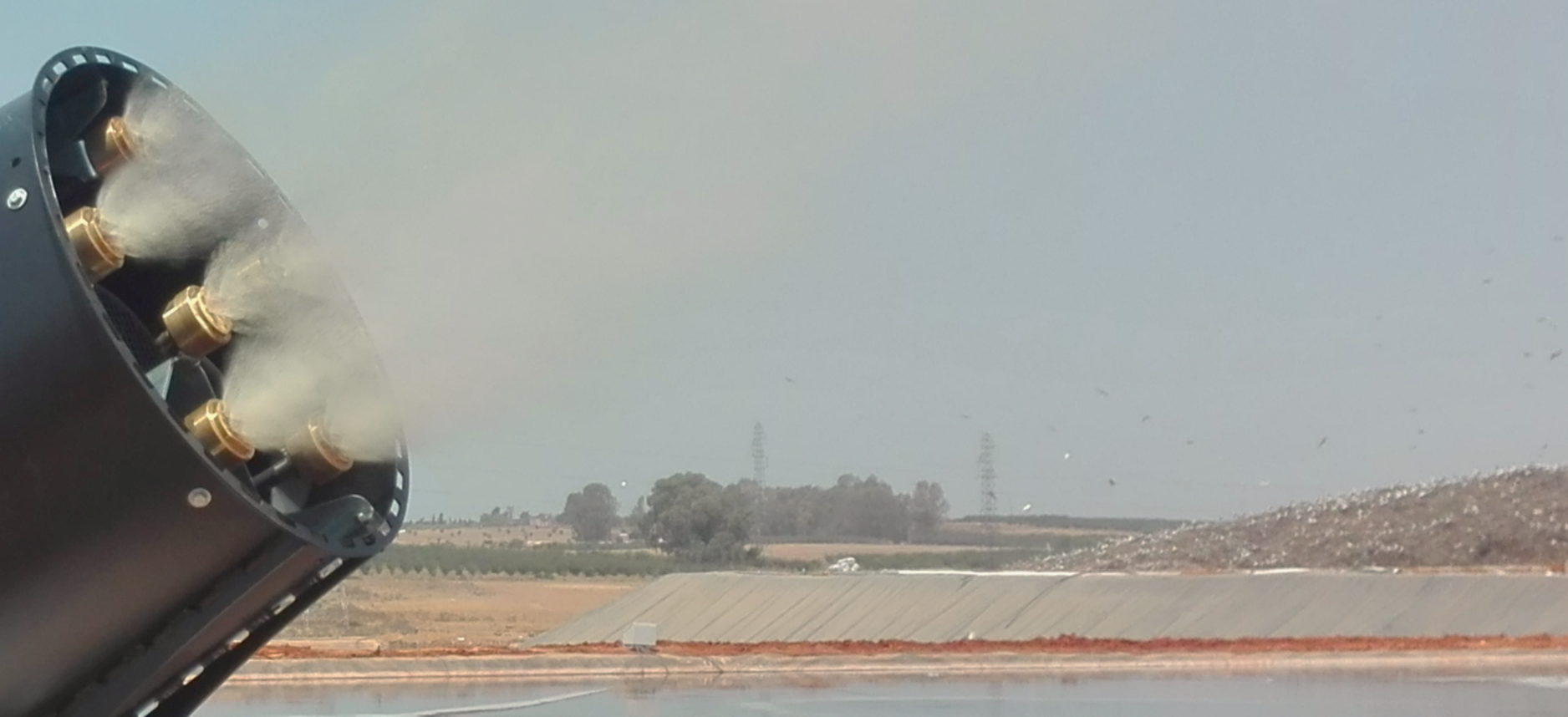
EVAP cannons are designed to accelerate liquid evaporation by generating a fine mist that disperses into the air. They are widely used in industries handling liquid effluents, such as mining, wastewater treatment, and industrial processes, to reduce liquid volumes in settling ponds and avoid costly expansions.
How do EVAP cannons work?
The system atomizes water into fine particles that evaporate more quickly when exposed to ambient air. Dissolved solids remain in the pond, allowing for controlled liquid volume reduction.
Which industries benefit from using EVAP cannons?
Los cañones EVAP son particularmente útiles para:
• Minería y canteras – Gestión de la acumulación de agua en pozos y estanques de relaves.
• Plantas de tratamiento de residuos: reducción eficiente de los residuos líquidos.
• Extracción de sal: mejora de la evaporación de la salmuera.
• Procesamiento industrial: control de los costos de eliminación de aguas residuales.
• Minería y canteras – Gestión de la acumulación de agua en pozos y estanques de relaves.
• Plantas de tratamiento de residuos: reducción eficiente de los residuos líquidos.
• Extracción de sal: mejora de la evaporación de la salmuera.
• Procesamiento industrial: control de los costos de eliminación de aguas residuales.
What factors influence evaporation efficiency?
La eficiencia de la evaporación depende de varias condiciones ambientales, entre ellas:
• Temperatura: las temperaturas más altas aumentan las tasas de evaporación.
• Humedad: una humedad más baja permite una evaporación más rápida.
• Condiciones del viento: el movimiento del aire ayuda a dispersar la niebla y mejora la evaporación.
• Exposición a la luz solar: la luz solar directa acelera el proceso.
• Temperatura: las temperaturas más altas aumentan las tasas de evaporación.
• Humedad: una humedad más baja permite una evaporación más rápida.
• Condiciones del viento: el movimiento del aire ayuda a dispersar la niebla y mejora la evaporación.
• Exposición a la luz solar: la luz solar directa acelera el proceso.
What pumping flow rates are available?
EVAP cannons are available in different sizes, with flow rates ranging from 200 to 700 LPM depending on the application. The 350 LPM model is the most popular due to its balance between efficiency and energy consumption.
Does the system require frequent maintenance?
No, EVAP cannons are designed for minimal maintenance. The external filter prevents clogging from solid particles and can be cleaned without stopping the equipment. The chassis and components are built with highly durable materials for long-term performance.
What materials are used in the construction of EVAP cannons?
El chasis y el tambor pueden estar hechos de:
• Acero galvanizado para aplicaciones estándar.
• Recubrimientos protectores especiales para mayor resistencia.
• Acero inoxidable para ambientes ácidos o altamente corrosivos.
• Acero galvanizado para aplicaciones estándar.
• Recubrimientos protectores especiales para mayor resistencia.
• Acero inoxidable para ambientes ácidos o altamente corrosivos.