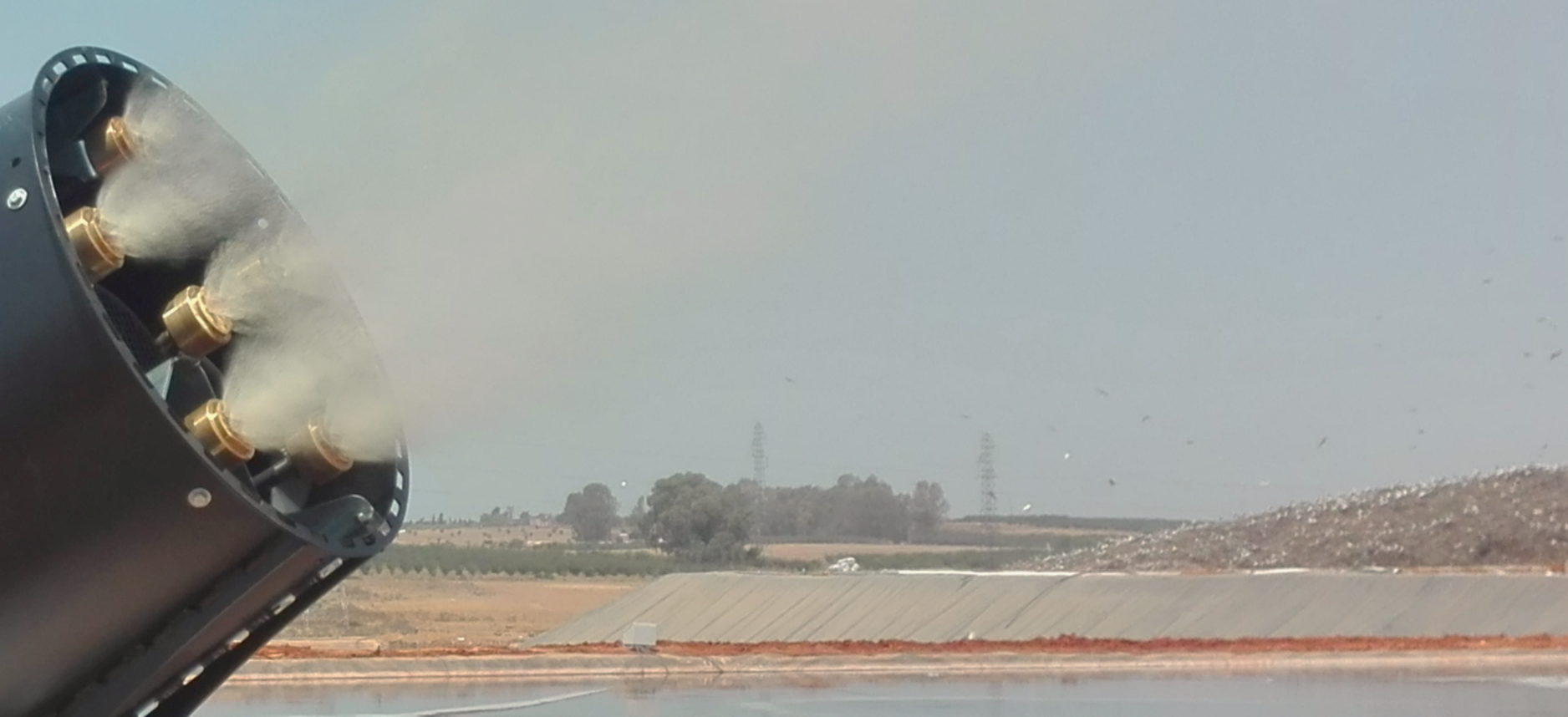
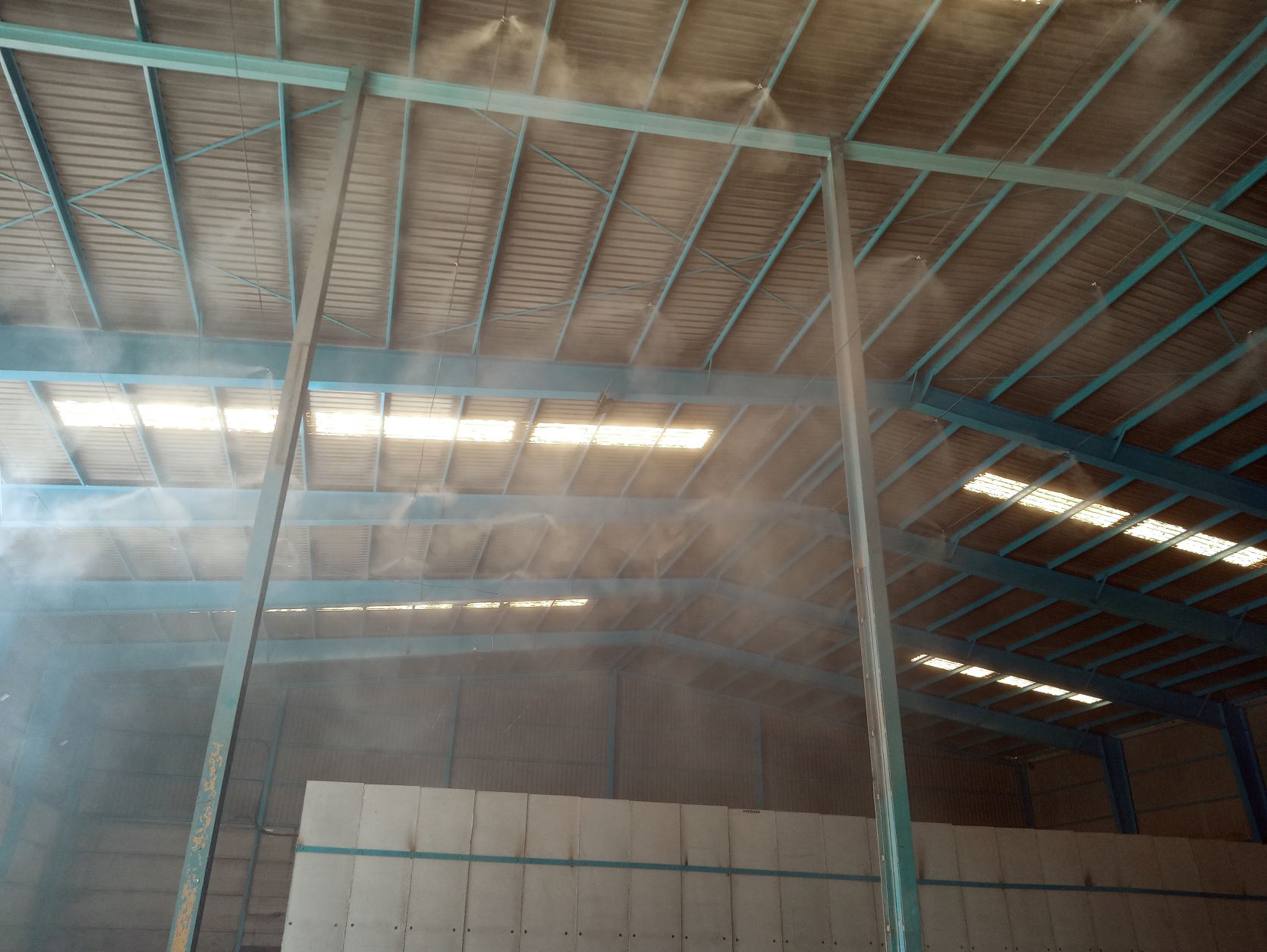
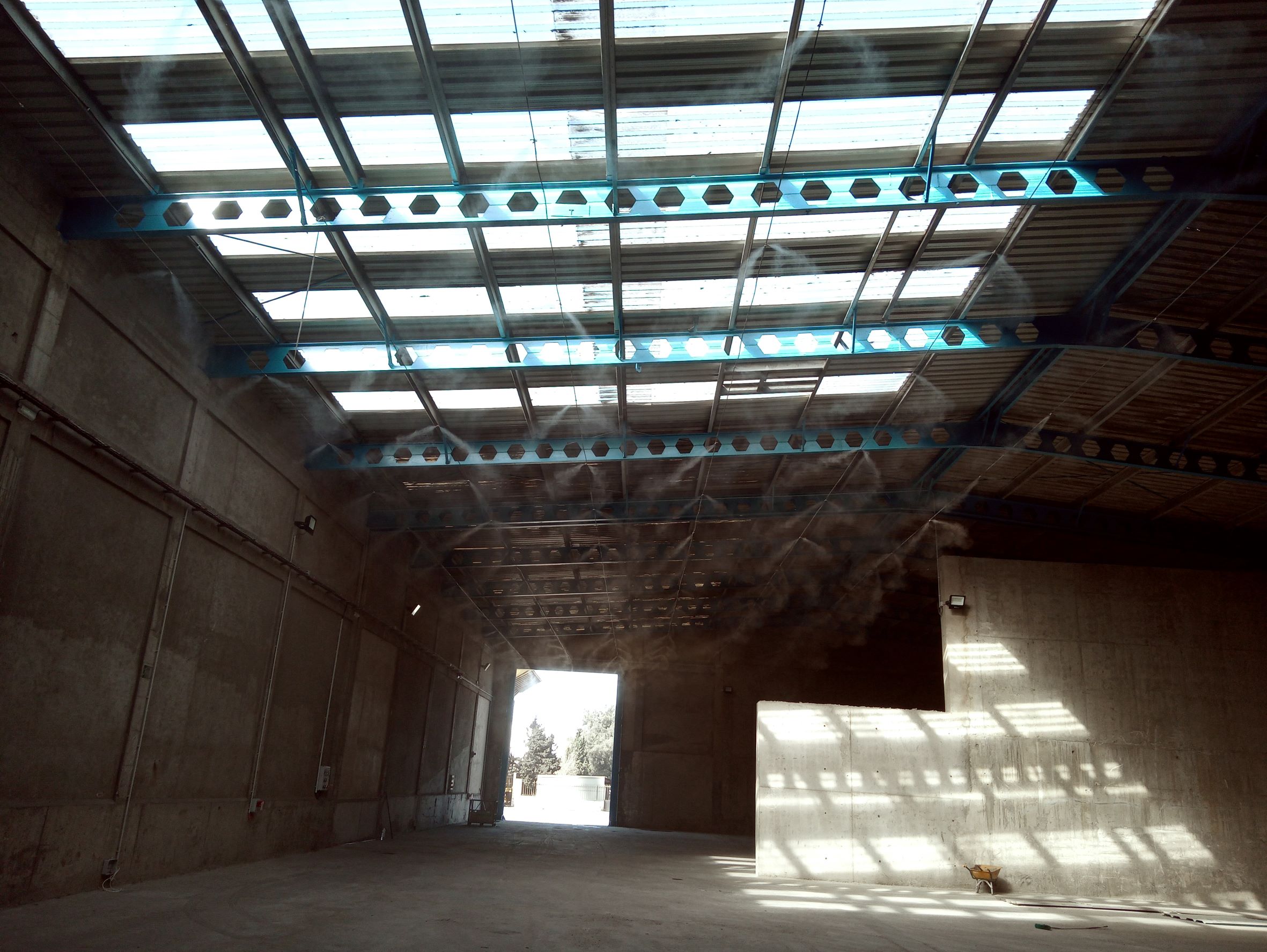
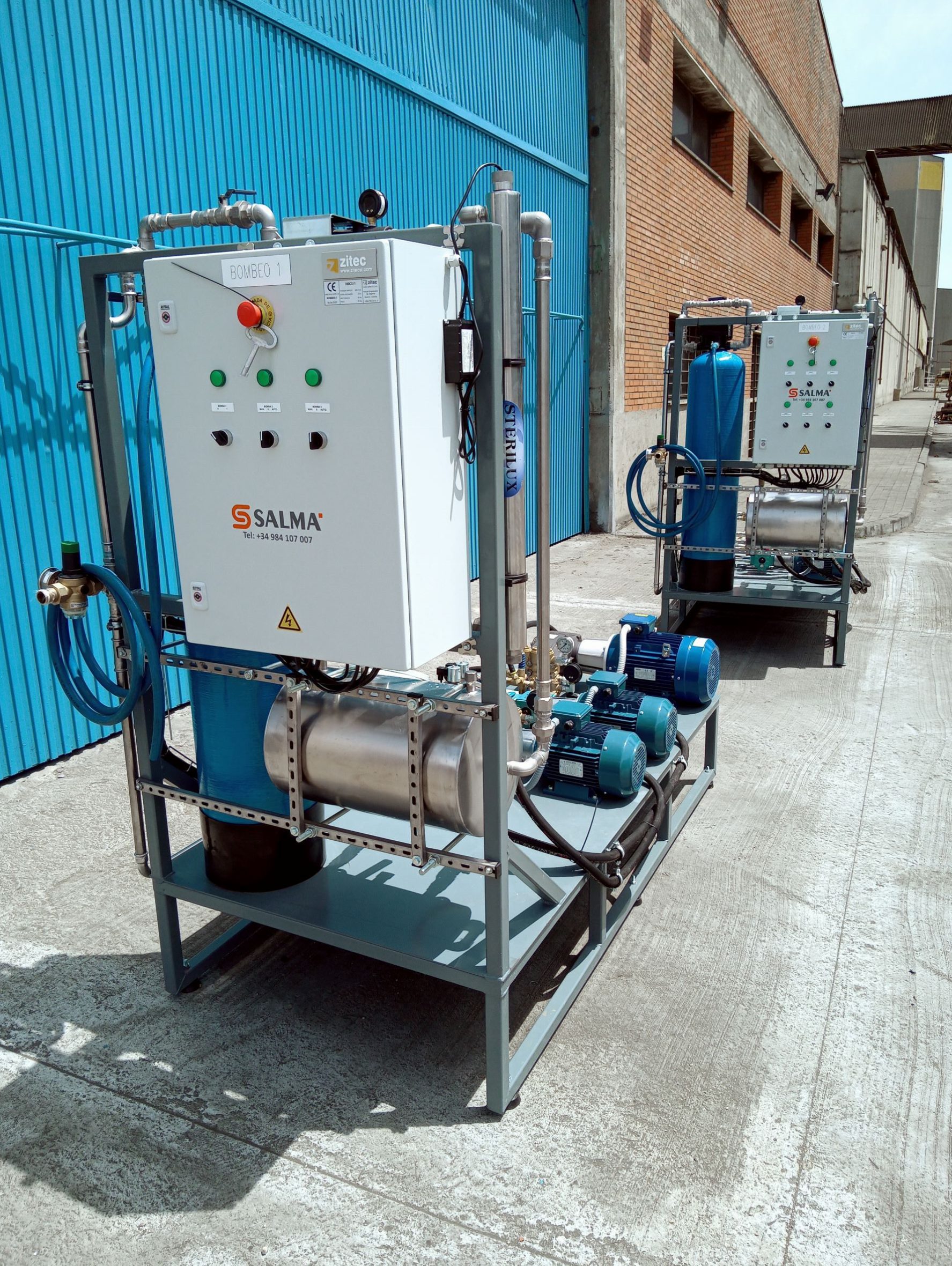
The spraying system is based on the dispersion of extremely fine water particles, generated by pumping water at high pressure through multiple nozzles arranged within a simple piping network. The mist produced is so fine that the water droplets do not tend to fall to the ground due to gravity; instead, thanks to their very low mass, they achieve high volatility and remain suspended in the air for longer periods without settling. This allows a portion of the mist not used in dust suppression to evaporate naturally.
With proper control of spraying intervals, most of the particles never reach the ground, ensuring that both the floor and the materials or equipment placed on it remain dry. This makes the solution particularly suitable for treating materials that cannot tolerate increases in moisture beyond certain levels, either because their properties would be affected or because their market value would be reduced.
The spraying system is supplied solely by mains water, meaning it does not require compressed air or any auxiliary systems. Its versatility allows misting to be applied throughout the entire workspace or only in specific areas where airborne dust is an issue. Similarly, a single facility can be divided into multiple independently operating zones, so that misting is activated only in areas where personnel or machinery are working, leaving the rest unaffected.